Booking choice: The guided summer day hike, from $183 per person. Check dates Tour details
Trolltunga is far safer than it was ten years ago. Since 2017 mountain rangers patrol the trail, three emergency shelters stand along the route, and the number of rescues has dropped sharply. The hazards haven't gone: a long day, fast-changing weather and a 700 m drop with no fence.
Here is what the official sources say about falls, rescues, weather, water and what to do if something goes wrong.
The quick answer
One fatal fall from the rock is on record, in September 2015. Rescues peaked at around 40 a year in 2016 and fell sharply after rangers started in 2017; the most common injury is a sprained ankle. Never hike in strong wind, heavy rain or fog. In an emergency call 112, which is free.
Has anyone fallen off Trolltunga?
Yes. In September 2015 a 24-year-old Australian student fell to her death while posing for a photo. It is the first and only recorded fatal fall from the rock.
She was studying at the University of Bergen. Police said she "stepped too far to the right" (The Local). After the fall, Norwegian tourist authorities pulled photos of people on the tongue from their marketing for a time.
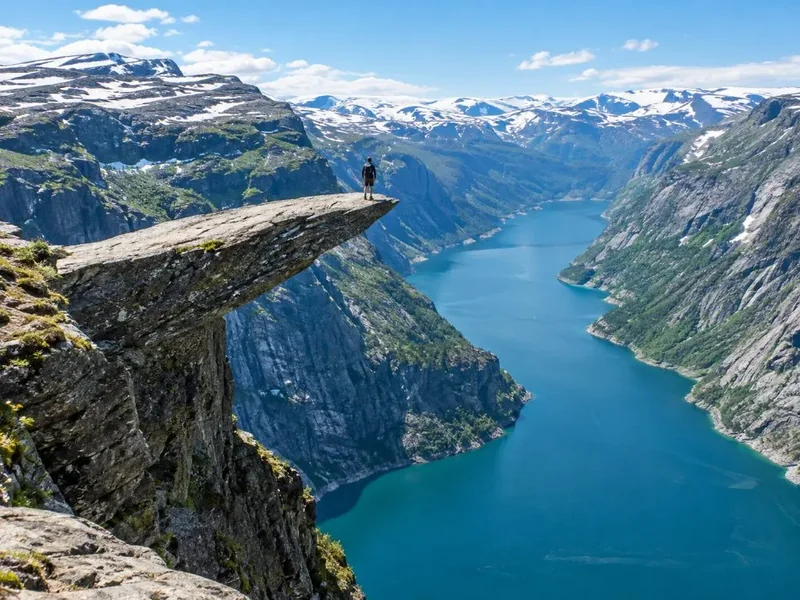
The lesson is simple and still ignored by some: keep a couple of feet from the edge, don't step back while posing, and don't go out on the rock in wind, rain or fog. Visit Norway notes there are no fences on the cliffs.
How many people need rescuing at Trolltunga?
About 40 a year at the peak in 2016, when the trail had no rangers. Since rangers arrived in 2017, rescues have dropped drastically. The most common injury is a sprained ankle.
Trolltunga AS records 42 rescue operations in 2016. Euromontana reports 40 in summer 2016 and 15 in summer 2017, the first summer with rangers. No later yearly totals are published.
Most rescues follow the same pattern: tired hikers on the way back, often late in the day, sometimes in poor shoes or weather. Visitor numbers grew from a few hundred a year around 2010 to around 80,000, many of them on their first mountain hike. Eat, rest and turn around in time.
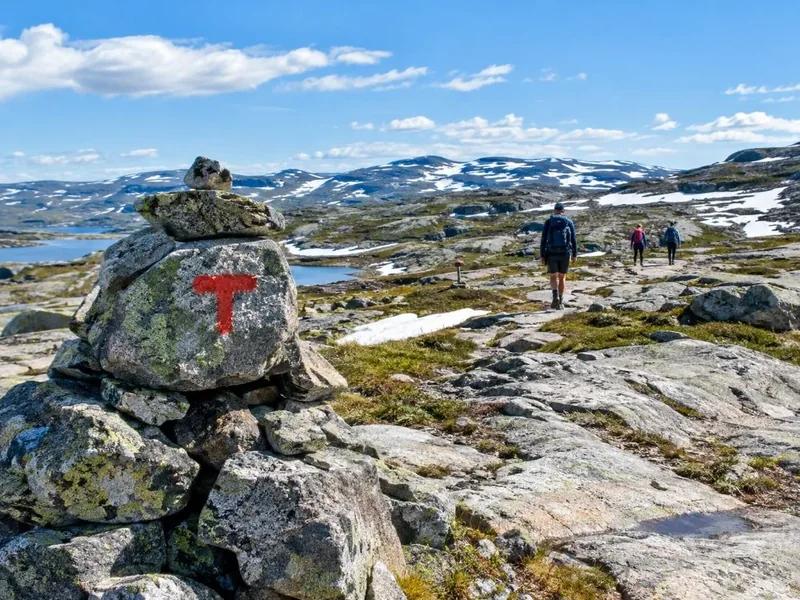
A guide watches the weather and the clock for you, with first-aid gear in the pack. Free cancellation up to 24 hours before.
Check dates for the guided summer day hikeWhat do the Trolltunga mountain rangers do?
They staff a ranger cabin around the clock from about mid-May to mid-October, check hikers' clothing, food and water, help in rescues, and organise the photo queue around midday.
The rangers and parking attendants check that hikers are dressed and supplied for the day, which prevents injuries before they happen. Rangers turn back hikers who are badly equipped or start too late, according to Euromontana. The 2026 ranger season ran from 14 May to 17 October, per the trolltunga.com homepage.
If a ranger tells you to turn back, turn back. They see the weather coming and know how long the return takes.
Where are the emergency shelters on the Trolltunga trail?
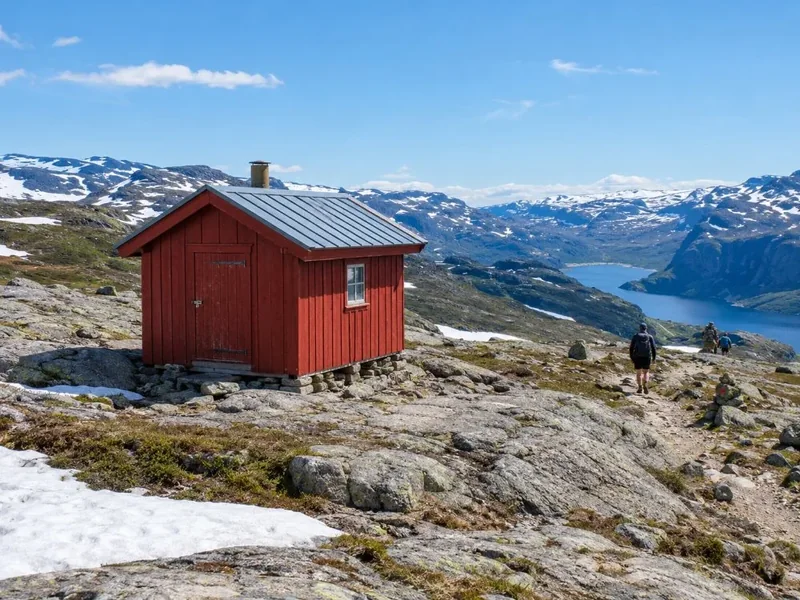
There are three: Floren, roughly halfway, then Endåen and Tyssehøl further on. Floren holds sleeping bags, blankets and food rations. They are for emergencies only.
Trolltunga AS names the three shelters in its FAQ and its ranger page says a new shelter opened near Trolltunga in 2023. The Floren shelter stands just before Store Floren, roughly halfway from P3. The others sit at the Endåen river crossing and at Tyssehøl, the old riverbed before the last stretch.
They are not overnight huts. Visit Norway says they are "for emergencies only and are not intended for overnight stays". If you want a night on the mountain, see camping and sunrise at Trolltunga.
When should you not hike to Trolltunga?
In strong wind, heavy rain or fog, in the official words. Also outside 1 June to 30 September without a guide, and on any day you can't start before about 8 am.
"Never hike to Trolltunga if there is a strong wind, heavy rain or fog," says the seasons page. It is always colder in the mountains than by the fjord, and the rock sits about 1,180 m above Odda's sea-level streets. Check Yr's Trolltunga forecast the night before and the morning of the hike.
Rain rises sharply in autumn. These are the climate normals for Odda from Yr (expect it colder and windier at the rock):
| Month | Normal temperature in Odda | Normal rainfall |
|---|---|---|
| June | 12.4 °C | 69 mm |
| July | 15.0 °C | 73 mm |
| August | 14.0 °C | 107 mm |
| September | 10.9 °C | 177 mm |
| October | 6.6 °C | 200 mm |
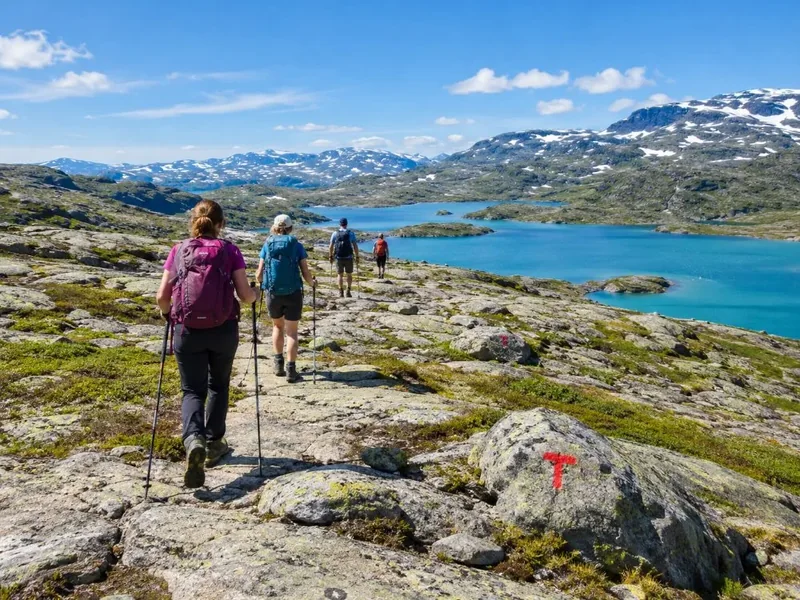
The guides watch the forecast and cancel only for dangerous weather, with free cancellation up to 24 hours before. Poles and spikes included.
Explore the guided summer day hike Tour detailsHow do you stay safe on the rock and in the queue?
Keep a couple of feet from the edge, keep your turn short, and don't step backwards while posing. If you hate heights, take the photo from the rock behind.
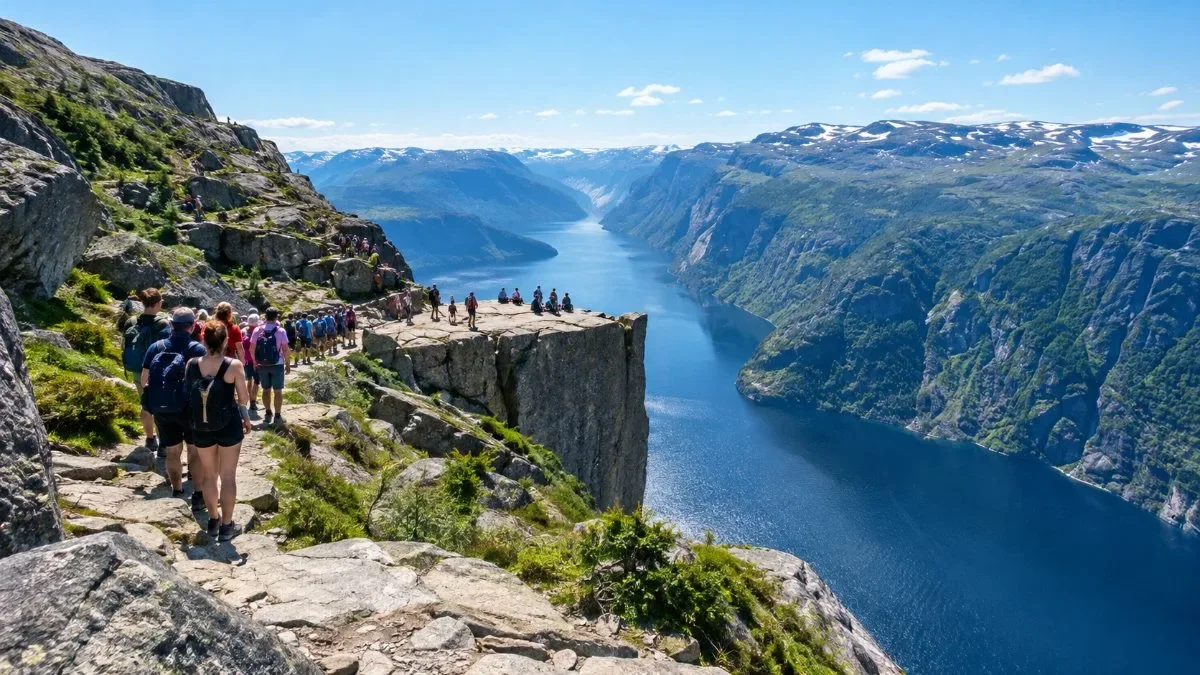
The photo-queue page asks for a few poses and no more, and suggests asking another hiker to take your photo if you're alone. The queue is 30 to 45 minutes on weekdays and 60 to 90 on Saturdays at midday in peak summer, so you'll stand near the edge for a while. Wait back from it, not on it.
Drones: pilots must register with Avinor, follow the rules, and avoid flying when many people are on the rock. Four iron steps lead down onto the tongue; take them slowly, especially when wet.
Is the water safe to drink, and what should you carry?
Fill up at P2. Stream water is used by many hikers after the first shelter near Floren, but it isn't tested, and water near Trolltunga and near cabins is not safe to drink.
The official water page gives the rules: fill your bottles by the P2 car park, don't refill before the first shelter, and avoid water near Trolltunga and the cabins. There are no toilets on the trail, only at P1 and P2. Carry out your used toilet paper.
The rest of your pack, per Visit Norway: a 30 L bag, map and compass, first-aid kit, charged phone, headlamp, hiking boots, wind- and waterproof layers, spare clothes, hat, gloves and plenty of food. Eat about every two hours. The guided summer hike asks guests to bring their own lunch and water too.
A guide with first-aid and safety gear, plus poles and micro spikes, on the classic day from P3.
Check dates for the guided summer day hikeWhat are the emergency numbers in Norway?
112 for police and general emergencies, 113 for medical help, 110 for fire. Emergency services in Norway are free.
Save these before you leave Odda:
| Number | For |
|---|---|
| 112 | Police and general emergency, including mountain rescue |
| 113 | Medical emergency, ambulance |
| 110 | Fire |
| +47 51 51 70 00 | JRCC Southern Norway, the rescue coordination centre |
When you call, give an exact description of where you are and what happened, then make yourself visible to rescuers. Mobile coverage reaches most of the trail but is patchy, so download the map before you go rather than relying on a live phone map. In winter, the official advice is to go only with a guide: guided or self-guided.
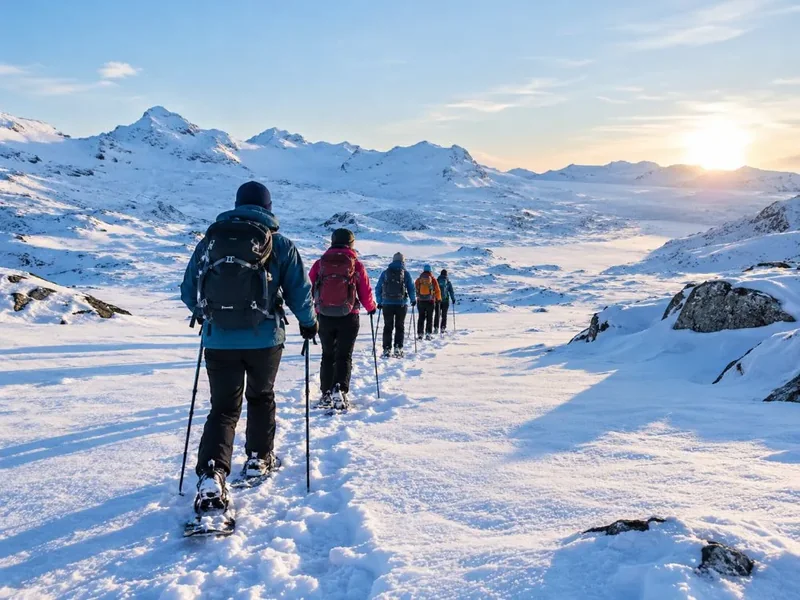
Between October and May, go with a guide: snowshoes, spikes, safety gear and a sled ride down from P3.
Explore the winter snowshoe hike Tour detailsFrequently asked questions
Is Trolltunga dangerous?
Not for prepared hikers in good weather. The risks are the long day, wet rock on the descent, and an unfenced 700 m drop. Rescues fell sharply after rangers arrived in 2017.
Are there fences at Trolltunga?
No. There are no fences or railings on the rock or the cliffs. Keep a couple of feet from the edge.
Is it safe to hike Trolltunga alone?
In summer, for experienced hikers, yes, and the trail is rarely empty. Trolltunga AS asks you never to leave members of your group on their own. Outside 1 June to 30 September, go with a guide.
Is there phone signal at Trolltunga?
Along most of the trail, says Visit Norway, but it is inconsistent. Download the trail map offline and carry a charged phone and a map.
Ready to book
Choose your tour
A local mountain guide on every option. Prices are from-prices in USD and move with the season; check each listing for its cancellation terms.
Trolltunga Guided Summer Day Hike
- Guide with first-aid and safety gear
- P2 to P3 shuttle up and back, weather permitting
- Hiking poles, micro spikes if there is snow
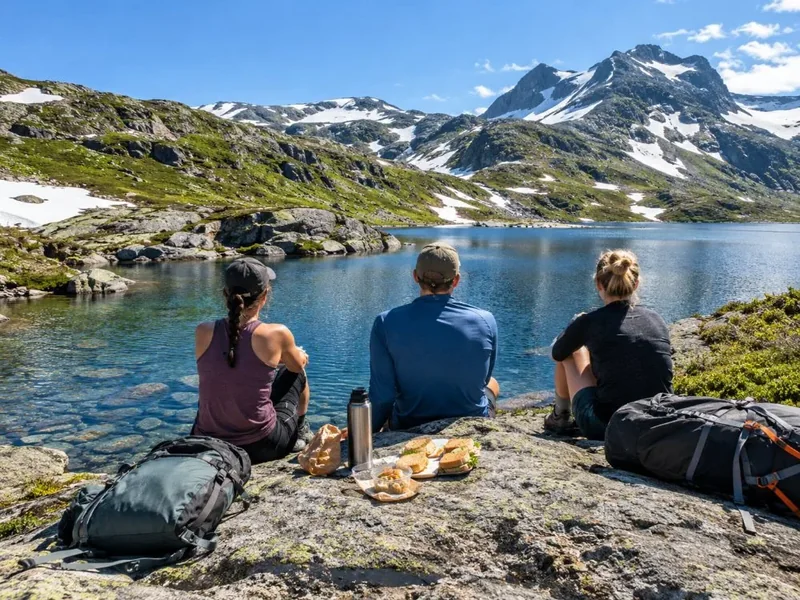
Trolltunga Day Hike with Lunch
The only day hike here that carries lunch and hot drinks for you
Trolltunga Winter Hike on Snowshoes
The way to reach the rock outside the summer season