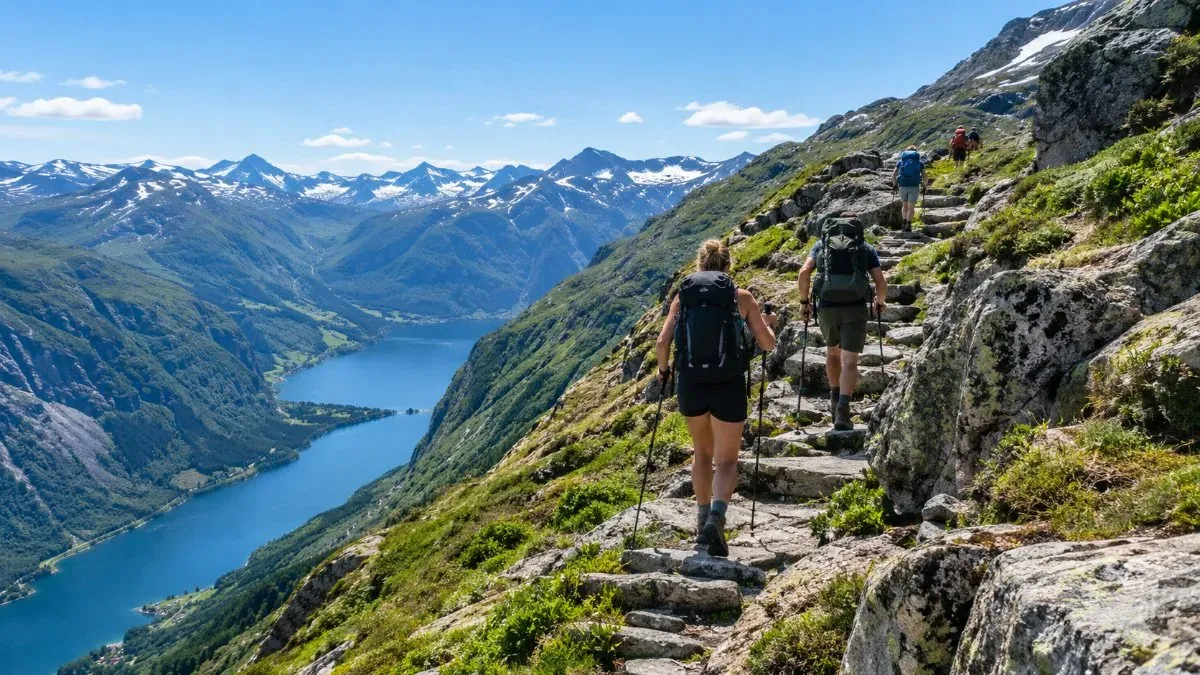
Booking choice: The guided summer day hike, from $183 per person. Check dates Tour details
Trolltunga AS grades the hike Very Demanding, and DNT, the Norwegian Trekking Association, calls it "Ekstra krevende", extra demanding. Neither grade is about danger on the rock. They are about distance: 20 km from the highest car park, with 800 m of climbing spread over a full day.
Here is where it gets hard, how fit you need to be, and how it compares with the other two famous rocks in Fjord Norway.
The quick answer
Trolltunga is graded Very Demanding because it is over 20 km long. The trail is not technical, but it has three steep climbs (Gryteskaret, Trombeskar and Endanuten), rocky ground the whole way, and a tiring descent. You need to be able to walk 7 to 10 hours on uneven ground. It is roughly three times as long as Preikestolen and longer than Kjerag.
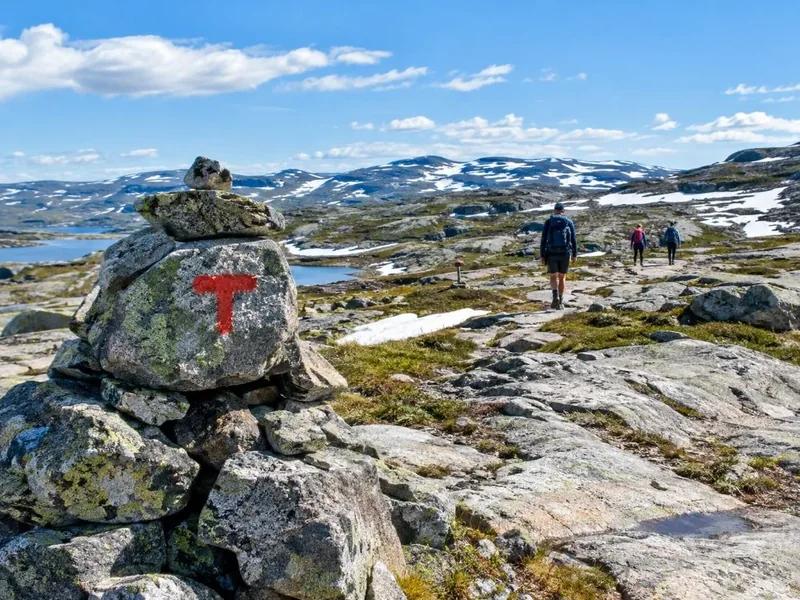
How difficult is the Trolltunga hike?
It is graded Very Demanding by Trolltunga AS and Ekstra krevende (extra demanding) by DNT. The difficulty is the length, not the terrain.
The official FAQ puts it plainly: "Since the hike is over 20 km long, it is automatically graded as Very Demanding." ut.no, DNT's route database, gives 27.5 km and 1,232 m of total ascent from Skjeggedal and the same top grade.
You don't need climbing skills on the normal route. What wears people down is ten hours of granite slabs, boulders and wet patches, with the same ground on the way back. The most common injury, according to the ranger service, is a sprained ankle.
Where are the hardest climbs?
Gryteskaret, about 45 minutes after P3, is the steepest. Trombeskar and Endanuten are shorter steep climbs, and from P2 the 4.3 km road adds 400 m before the trail even starts.
Section by section, from the car park at Mågelitopp:
| Section | What it's like | Why it hurts |
|---|---|---|
| P2 to P3 road | 4.3 km of paved road, 400 m of climb | Only if you skip the bus; a dull hour before the real start |
| Gryteskaret | A long, rocky slope to a pass, with a 5 m boulder at the top | Comes early, before you've warmed up; "one of the most strenuous stretches" |
| Trombeskar | A second steep climb into a grassy valley | Back-to-back with Gryteskaret |
| The plateau | Hestaflåene and the Endåen bridges, many small ups and downs | Feels flat on the map, isn't underfoot |
| Endanuten | A last steep climb before Tyssehøl | Hits when legs are already tired |
| The way back | The same climbs downhill, often on wet rock | Knees and ankles; most accidents happen here |
Source for the route: the official hike description. Snow can lie on the high sections until June, which makes them slower and slippery.
Poles and micro spikes are lent on the guided summer hike, and the guide sets a pace that gets you back.
Check dates for the guided summer day hikeHow fit do you need to be for Trolltunga?
Fit enough to walk 7 to 10 hours on rough ground with a day pack. If you have never walked 15 km over hills, train first.
The official preparation page says the walk is long and arduous, that people with heart problems or other medical conditions should not go, and that anyone not used to long days of walking should train with shorter hikes first or pick a different attraction.
Our rule of thumb: if you can do a 15 km hill walk with 600 to 800 m of climbing and still enjoy the evening, you can do Trolltunga from P3. If that sounds like a stretch, start from P3 rather than P2, go on a weekday, and go with a guide who will set a steady pace. Break every hour or two and eat every two hours, as Trolltunga AS advises.
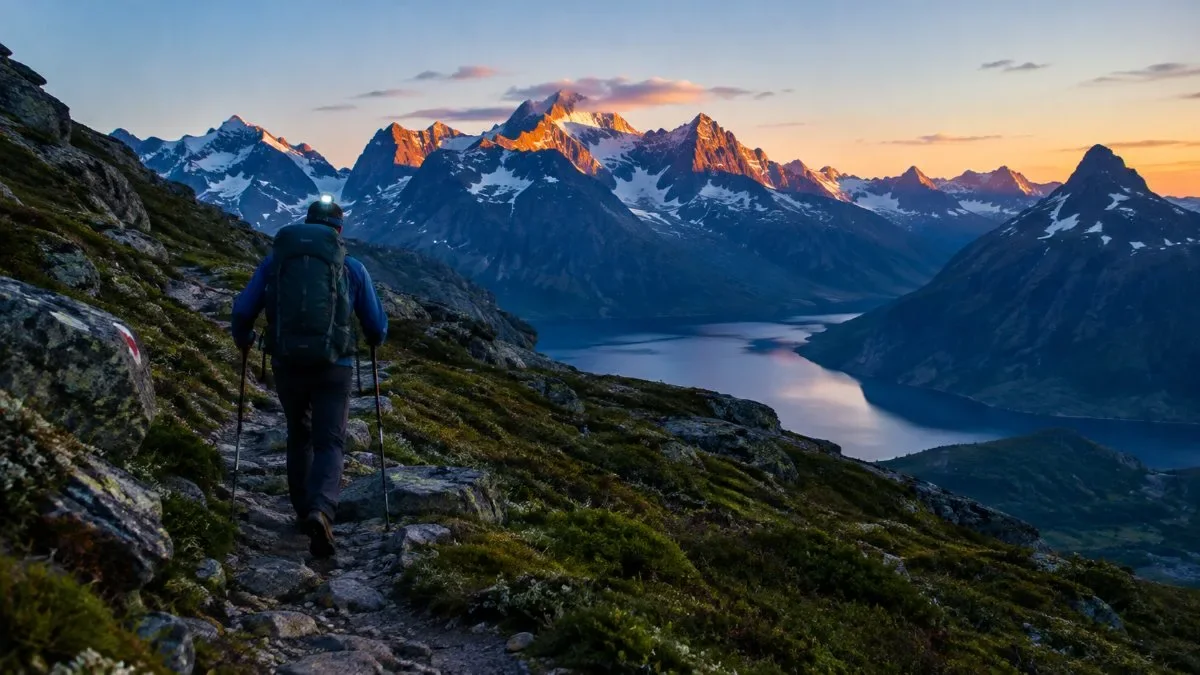
Is Trolltunga hard on the knees?
Yes. There is 800 m of descent from the rock back to P3, much of it over rock steps. The guided tours say they are not suitable for people with troublesome knees.
Both the guided summer hike and the via ferrata day list knee problems as a reason not to book. Trolltunga AS also recommends the shuttle for the return, because the descent "often feels longer and more demanding than expected".
- Use poles. The guided summer hike lends them.
- Take the Road Bus down. It saves 4.3 km of steep tarmac at the end, for NOK 100.
- Slow down on wet rock. Short steps on the descent, especially after Gryteskaret.
- Start from P3, never P1. P1 adds 1,200 m of extra climbing and descent.
Is Trolltunga harder than Preikestolen or Kjerag?
Yes, by distance. Trolltunga from P3 is about 20 km and 7 to 10 hours. Preikestolen is about 8 km and 4 hours. Kjerag is about 11 km and 6 to 10 hours, with steeper sections.
The three famous rocks of Fjord Norway, compared on official figures:
| Hike | Return distance | Ascent | Time | Hardest part |
|---|---|---|---|---|
| Trolltunga from P3 | 20 km | 800 m total | 7 to 10 h | Length and three climbs |
| Trolltunga from P2 | 27 km | 1,200 m total | 8 to 12 h | As above, plus the road |
| Preikestolen | About 8 km | 500 m | About 4 h | Busy, rocky steps |
| Kjerag | About 11 km | About 800 m | 6 to 10 h | Steep slabs, some with chains |
Sources: trolltunga.com, Fjord Norway on Preikestolen and Visit Norway on Kjerag. Kjerag is steeper and more exposed in places; Trolltunga is simply much longer. If Preikestolen felt easy, Trolltunga will still be a big step up.
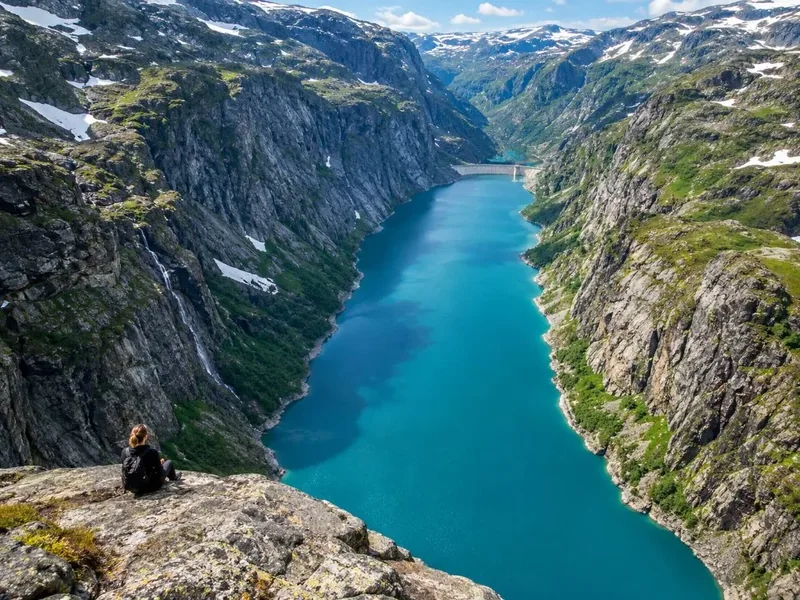
Is stepping onto the rock scary?
For some people, yes. The rock juts out 700 m above Ringedalsvatnet with no fence, and you reach it down four iron steps. You don't have to go out on it.
The step down is easy for your feet and hard for your head. There is no railing, and Visit Norway warns that a fall from the unfenced cliffs would be fatal, so keep well back from the edge in wind or fog. If you hate heights, Trolltunga AS suggests a photo of you on the rock behind, taken from the side, right after someone else has climbed back up.
Guides on the summer hike take photos of you on the rock, and when the weather allows they rappel to shoot the "needle view" from below.
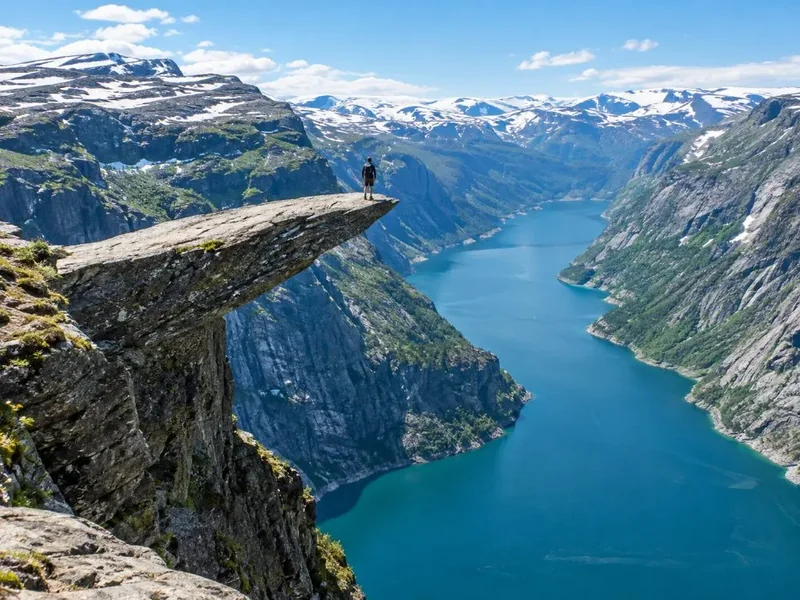
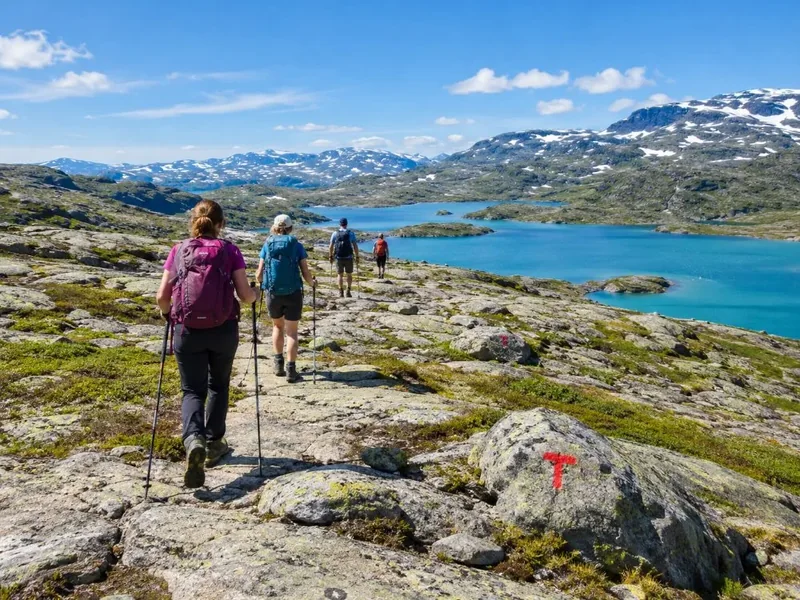
A guide sets the pace, carries first-aid gear and takes your photo on the rock. Poles and spikes included, shuttle to P3 both ways.
Explore the guided summer day hike Tour detailsCan beginners or children do Trolltunga?
Fit beginners can, ideally with a guide. Trolltunga AS recommends a minimum age of 12, and says the mountain is not safe for infants and toddlers.
Beginners: Trolltunga AS recommends a guided hike for anyone with limited mountain experience. The guided summer hike takes ages 13 and up, and the day hike with lunch suits people with at least some hiking experience. The via ferrata and the overnight tent trip start at 15.
Children: the official advice is a minimum age of 12, in good shape and used to long walks. The Road Bus sells child fares for ages 4 to 12, but that is a fare band, not an endorsement. A 10-hour day on rock is a lot for anyone under 12. For younger families, the walk to Buerbreen, an arm of the Folgefonna glacier near Odda, is a shorter option at about 6 km return.
Is the via ferrata route harder than the normal trail?
Harder on the nerves, not much harder on the legs. It swaps the first climb for a 250 m cabled wall above Ringedalsvatnet, then joins the normal trail for the last 3 km.
The Trolltunga Via Ferrata is graded demanding, guided throughout, and for ages 15 and up in good shape. The full day is 24 to 28 km with about 800 m of ascent and takes 10 to 12 hours. On the via ferrata day you clip into steel cables with a harness and helmet, with the optional 50 m Sky Ladder on top. Weight limits are 40 to 120 kg.
Pick it if heights excite you and the crowded early trail doesn't. Skip it if you have bad knees or a real fear of heights; the operator says so too. The way back is the normal trail.
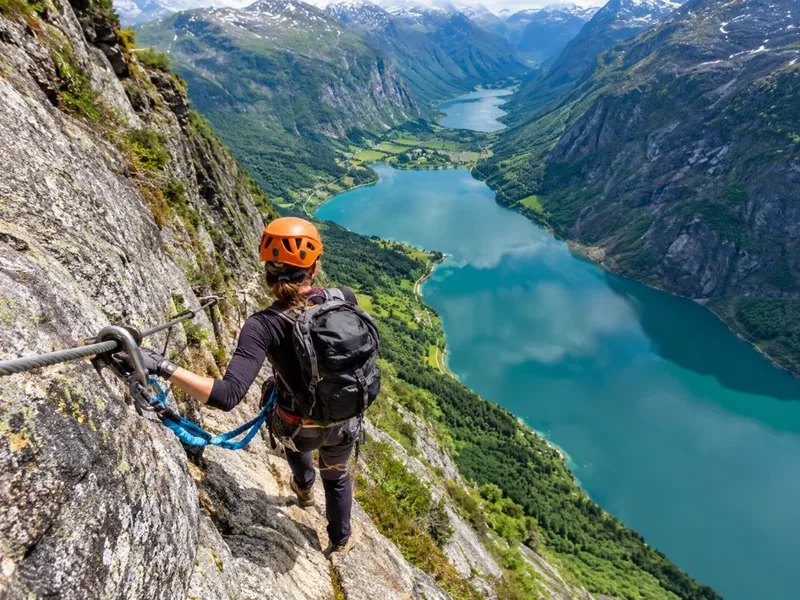
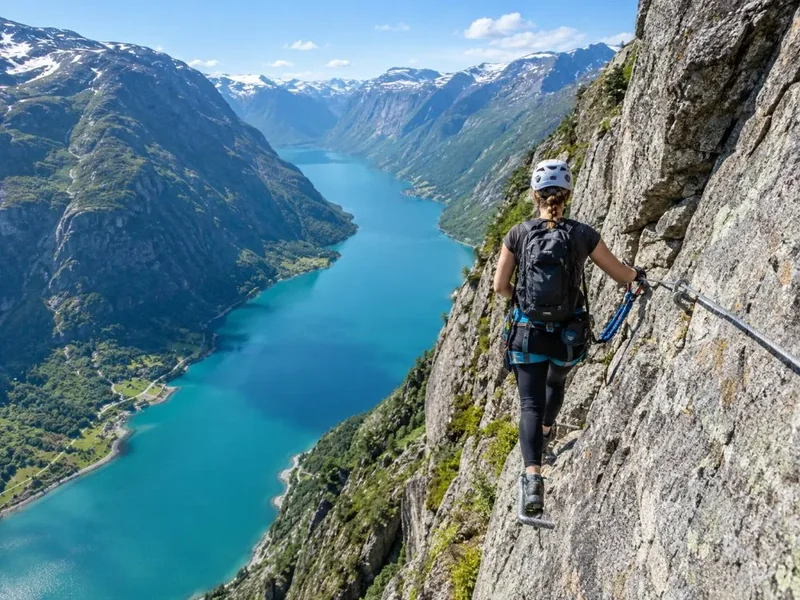
Climb the cabled wall above Ringedalsvatnet instead of the busy first climb, with the optional 50 m Sky Ladder. Ages 15+, fit hikers only.
Explore the via ferrata day Tour detailsFrequently asked questions
Can I hike Trolltunga in trainers?
Visit Norway's gear list says hiking boots, not trainers or jeans. The trail is wet granite and loose rock for 20 km; ankle support matters on the way down. Boots can be rented in Skjeggedal.
Is there snow on the trail in June?
Often, yes. Trolltunga AS says the path is often covered with snow until May or June, above about 1,000 m. Guided hikes lend micro spikes when needed.
What is the most common injury at Trolltunga?
A sprained ankle, according to the mountain rangers. Most accidents happen on the way back, when hikers are tired.
Is Trolltunga harder than Kjerag?
Longer, not steeper. Kjerag is about 11 km with steeper, more exposed sections; Trolltunga is 20 to 27 km. Most people find Trolltunga the more tiring day.
Ready to book
Choose your tour
A local mountain guide on every option. Prices are from-prices in USD and move with the season; check each listing for its cancellation terms.
Trolltunga Guided Summer Day Hike
- Guide with first-aid and safety gear
- P2 to P3 shuttle up and back, weather permitting
- Hiking poles, micro spikes if there is snow
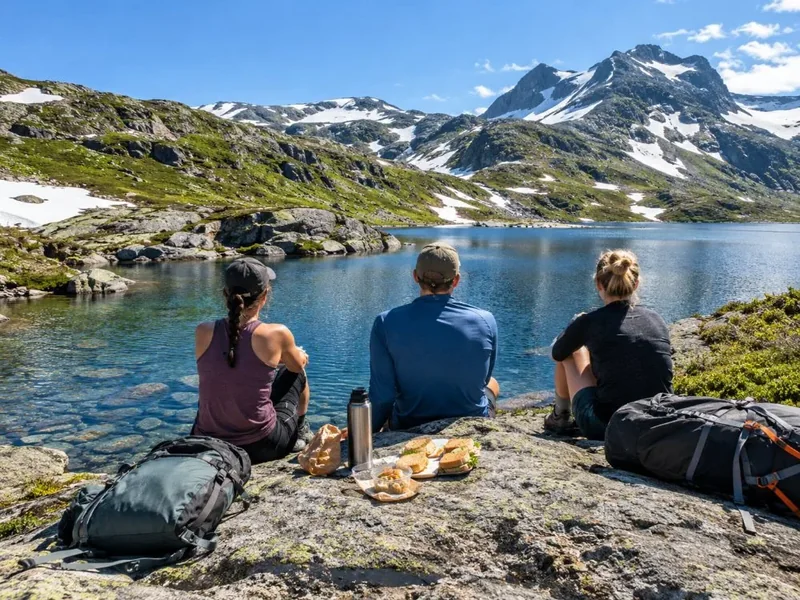
Trolltunga Day Hike with Lunch
The only day hike here that carries lunch and hot drinks for you
Trolltunga Via Ferrata & Sky Ladder Day
- Guide with climbing and first-aid gear
- Harness, helmet and via ferrata set
- Optional 50 m Sky Ladder